

Why does a smaller gear make a big difference?
Connect your pedals, chain, and wheels—and see how a gear change changes the effort.
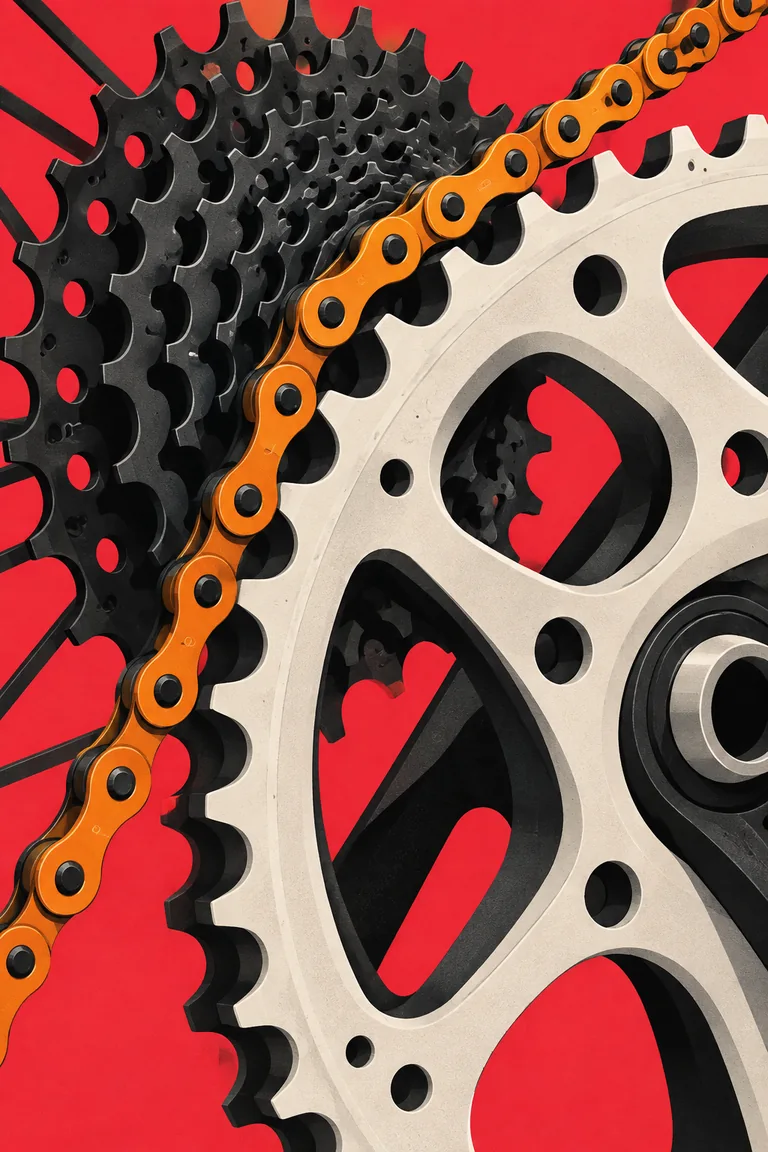
LET’S TAKE
A CLOSER LOOK.
Choose a step or follow the sequence.
The complete explanation is here, too.
Start with the rider
Turning the pedals rotates the crank and front chainring.
- 01 / PEDALS
Start with the rider
Turning the pedals rotates the crank and front chainring.
- 02 / CHAIN
Transfer the motion
The chain connects the front chainring to a cog on the rear wheel.
- 03 / COGS
Choose a different relationship
The sizes of the front chainring and rear cog affect how hard it feels to pedal.
- 04 / SHIFT
Move the chain
A shifter operates a derailleur, which guides the chain onto a different gear.
- 05 / EASIER
Make the climb easier
A smaller front chainring or a larger rear cog makes pedaling easier.
- 06 / HARDER
Choose more resistance
A larger front chainring or a smaller rear cog makes pedaling harder. More gears offer more choices, not automatically a better ride.
What this model covers.
A simplified conventional derailleur drivetrain, not an internal-gear hub. Gear choice also depends on terrain and the rider.
GO TO THE SOURCE · OPENS A NEW TABREI · How to use bike gearsAn authored visual explanation. The illustration is a metaphor; the steps describe a simplified model.
ANOTHER QUESTION.
ANOTHER WAY IN.
What happens when you pay online?
Follow a payment from checkout to confirmation—and see why “processing” is not the same as “paid”.

How does a name find a website?
From a familiar address to a server: meet the lookup that gets you to the right place.

Where does the rain go next?
Follow water through the atmosphere, across the land, and below the surface.